Read: The article entitled "Your Hands, Christ's Hands" (on the yahoo group)
5. Watch:
6. Create:
Create a video, picture diary or artistic creation depicting hands serving the Lord. (you should use your own hands if possible ) Show your hands serving others and serving the Lord. If you are using a digital medium please send a link out on the blog on Thursday.
7. Think About:
Complete a word study on your chosen characteristic (for your leadership project). How does Christ emulate this characteristic? How does an effective leader emulate this characteristic? How does your chosen characteristic bless others?
8. Memorize:
Please pick your own thought, or poem, or quote AND scripture that has to do with Leadership, or the attribute you are studying for your leadership project this month. The following youth will share their memorization this week:
Aaron
Nic
Jared
Donovan
Arianna
Esther
Josee
Jennah
Makenna
9. Project:
Study about the person who emulates the characteristic you are studying as a part of your leadership project for this month. Please come to class prepared with a 1-2 minute oral presentation to share with the class on your person. Remember to share how this person emulates the quality you are trying to develop. Please plan to share how they used their hands to serve others. Continue working on your plan to gain the attribute you are learning about this month.
Use more than just Wikipedia. Be prepared to share what you've learned. You will have 3 minutes to present your person and 2 more minutes to answer questions. Send out an email to the group that states who you are researching so that we don't have any duplicates. NOTE: You can bring pictures to show while you talk, but basically this will just be you speaking to us--no prezis, no skits, no interpretive dances ;^)
For Master class this month, I want you to come up with your own business idea. Be creative and come up with something you could sell, a service to provide, etc... and come prepared to share YOUR business. You need to make a business plan (visuals would be good!) which will show what you would expect to spend, how much profit you would expect, how (and to who) you would market your product/service, how you would figure out your pricing, what suppliers would you work with for raw materials, will you be hiring employees, what regulations you would have to follow, etc...
Here are this week's 25 cultural literacy terms for the game night at the end of the month! This is optional, but please study the terms and come if you can!
2. Read: The following parts of the U.S. Constitution:
Preamble
Article I
Article II
Article III
3. Read: John 15:1-27 OR Matthew 5:1-48 (please choose only one)
4. Watch:
5. Project:
Continue working on your chosen project for this month. Remember, this project should be something that is personally meaningful and inspiring to you. This is the application part of apprentice (applying principles to ourselves). Are you being challenged? Are you blessing someone else? Don't forget: we will be giving presentations on our projects. Keep working on it. This week, write your feelings about what you are learning from your project. Send me an email about your feelings or bring me a little paragraph to class.
For History Class, you have each been assigned to ONE branch of government (look for an email; I didn't want to post it on a public blog). Please do the following for the branch of government that you have been assigned:
Legislative:
Study: Study and prepare a presentation on the roles and responsibility of your branch (you will be responsible to share your presentation with others who did not study about your branch of government so please make sure you do a thorough presentation).
Hero Study: Study about a person who has served in your branch, either today or during the period of history we are studying this year. Learn about how they handled their responsibilities as a member of that branch.
Watch:
(This video has quizzes at the end. You can continue watching and take them if you want, but it's not required).
Create: Create a visual presentation on the branch of government you are assigned. This can be art work, build something, write a paper, bake something, prezi, skit, etc.(If you choose to do a prezi or skit you will need to record it and send it out before class. We will not have enough time during class for prezis or skits).
Think About: Complete a word study on "Government." Think about the following: How do checks and balances keep our lives in order? How do checks and balances between the different branches of Government keep our government in order? What has happened in history when balance is overridden? What happens in our own lives when we get out of balance? How do we fix our own lives?How can we fix our branches of government when they are out of balance?
Executive:
Study: Study and prepare a presentation on the roles and responsibility of your branch (you will be responsible to share your presentation with others who did not study about your branch of government, so please make sure you do a thorough presentation).
Hero Study: Study about a person who has served in your branch, either today or during the period of history we are studying this year. Learn about how they handled their responsibilities as a member of that branch.
Watch:
(This video has quizzes at the end. You can continue watching and take them if you want, but it's not required).
Create: A visual presentation on the branch of government you are assigned. This can be art work, build something, write a paper, bake something, prezi, skit, etc.(If you choose to do a prezi or skit you will need to record it and send it out before class. We will not have enough time during class for prezis or skits).
Think About: Complete a word study on "Government." Think about the following: How do checks and balances keep our lives in order? How do checks and balances between the different branches of Government keep our government in order? What has happened in history when balance is overridden? What happens in our own lives when we get out of balance? How do we fix our own lives? How can we fix our branches of government when they are out of balance?
Judicial:
Study: Study and prepare a presentation on the roles and responsibility of your branch (you will be responsible to share your presentation with others who did not study about your branch of government so please make sure you do a thorough presentation).
Hero Study: Study about a person who has served in your branch, either today or during the period of history we are studying this year. Learn about how they handled their responsibilities as a member of that branch.
Watch:
(This video has quizzes at the end. You can continue watching and take them if you want, but it's not required).
Create: Create a visual presentation on the branch of government you are assigned. This can be art work, build something, write a paper, bake something, prezi, skit, etc.(If you choose to do a prezi or skit you will need to record it and send it out before class. We will not have enough time during class for prezis or skits).
Think About: Complete a word study on "Government." Think about the following... How do checks and balances keep our lives in order? How do checks and balances between the different branches of Government keep our government in order? What has happened in history when balance is overridden? What happens in our own lives when we get out of balance? How do we fix our own lives? How can we fix our branches of government when they are out of balance?
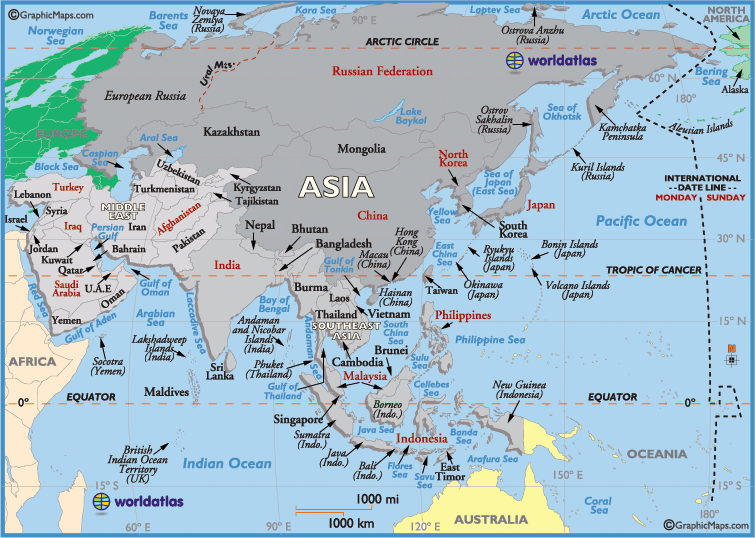
2. Memorize: The location of the following countries and be able to put them on a map:
Norway
Sweden
Finland
Denmark
United Kingdom
Ireland
France
Spain
Germany
Italy
Netherlands
Switzerland
Belgium
Greece
Morocco
Algeria
Libya
Tunisia
Egypt
Turkey
Syria
Iraq
Iran
Lebanon
Israel
Jordan
Afghanistan
Pakistan
India
Nepal
China
3. Email the Class Preparation Sheet to Sis. Bird and Sis. Shupe by the Tuesday before class. I would like them by noon, but I would allow them until 8 p.m. If I do not receive an email from you, then you will not be joining us for class.
Inspirements:
Pick one of the following to turn in (REMEMBER: PREZIS AND SKITS ARE OKAY FOR APPRENTICE BUT NOT, I REPEAT NOT, ALLOWED FOR JOURNEYMAN OR MASTER):
Read one of these chapters from The Struggle For Sea Power: James Bruce and the Nile, The Trial of Warren Hastings, or Napoleon Bonaparte. Also, do additional research to share with the class. You can write a paper, write a story, or do an in-person presentation in class (no prezis) to teach us about what you've learned. I would love to see you be creative and show us more about the culture of India or the geography of James Bruce's trip up the Nile, or whatever you find interesting in those chapters.
Research more about one of the people you learned about and present what you learned to the class. Your presentation should also include something written to turn in. Some examples of people would be: Marie Antoinette, Lafayette, Robespierre, Mirabeau, or King Louis.
Research the form of government that France was under before and after their Revolution. Go into detail about how each worked or didn't work for each class of the French people.
Find more about the French Revolution and find a way to share what you've learned: a paper, chart, presentation (in person), etc.
Research the Women's March on Versailles. Share what you found out with us.
Research the guillotine. Share with us. I would expect some sort of visual with this one. Anyone who builds a model gets a treat!
Pick your choice of the following (you can write an essay or other type of paper, make a video, write a blog post, or come up with something on your own-no prezis or skits-if you clear it with Sister Shupe or Sister Bird).
A Tale of Two Cities is full of contrasts-"it was the best of times, it was the worst of times" is one of the best known beginnings to a novel. Choose 2 or 3 things or people to compare and contrast. Some examples would be: compare the reasons and results of the American and French Revolution, or contrast the characters of Carton and Darnay or the women of the French Revolution and Lucie. Make sure to consider the principles which influenced the people or events.
A Tale of Two Cities highlights transformation-of France; of people. Share your thoughts about a transformation you found in the book and how or why it affected you. Did reading this book transform you in any way? Share that with us.
Dickens used a theme of resurrection and redemption in A Tale of Two Cities. What examples did you find of this theme? Do you agree that this was the theme? If not, what do you think it was? Show examples.
Write a story of your own using one or more characters from the book. Don't forget to include historical facts and/or stories and make sure your character(s) illustrate a principle that you found in the book.
Some of the characters faced imprisonment, either physically, as a result of addictions, from circumstances in their lives, etc. Share your thoughts and examples with the class. Consider whether you also are bound in some way as a result of habits or thoughts or something else. How can you work on changing them? Make a plan and follow through.